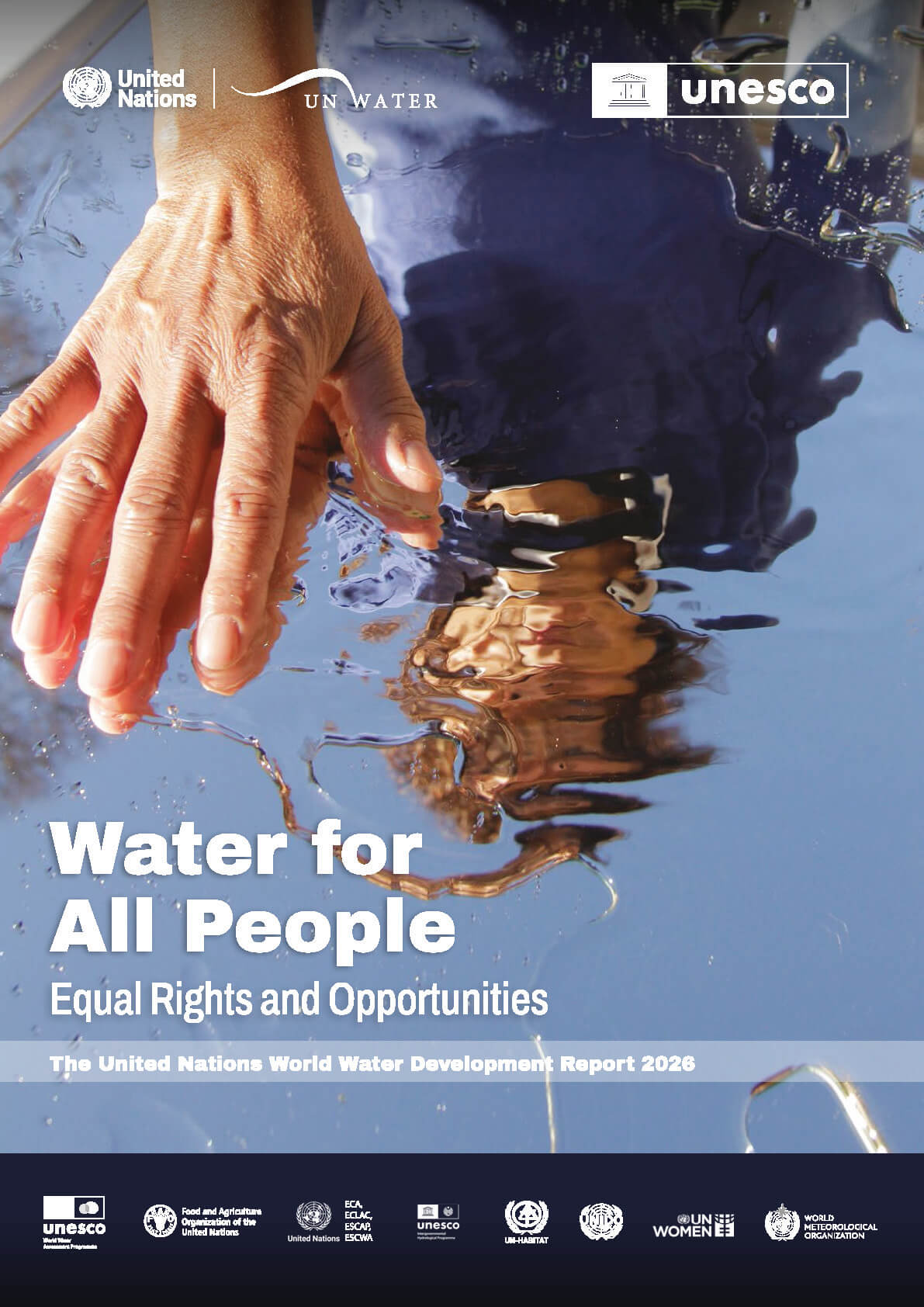
Gender inequalities continue to undermine global water security, disproportionately affecting women and girls. While they are often responsible for collecting and managing household water, they remain underrepresented in water governance, leadership and technical roles.
The United Nations World Water Development Report 2026: Water for All People – Equal Rights and Opportunities highlights how unequal access to water and sanitation services impacts health, education, livelihoods and safety. Today, 2.1 billion people still lack safely managed drinking water, and women and girls spend an estimated 250 million hours every day collecting water.
The report examines how climate change, water scarcity and disasters are intensifying these inequalities and calls for stronger action to ensure equal rights, participation and opportunities in water management.
By promoting inclusive water governance, gender-responsive policies and improved data, the report outlines practical steps to close gender gaps and advance progress towards sustainable water management and the Sustainable Development Goals.
English | French | Italian
Arabic | Chinese | English | French | German | Hindi | Indonesian | Italian | Korean | Portuguese | Russian | Spanish | Vietnamese
English | French | Italian | Portuguese |Spanish
UN-Water Publications
UN-Water’s publications can be divided into two main groups: the publications that represent all Members and Partners of UN-Water – the collective products – and the publications that are under the UN-Water umbrella but produced by groups or individual UN-Water Members and/or Partners – the related products.
No comment yet.